
KIDNEY DIET & NUTRITION
What you eat every day has a direct impact on your kidney health —
and the good news is, small changes can make a big difference. Your kidneys work hard to filter waste, balance fluids, and regulate key nutrients in your body, and the foods you choose either support that process or make it more difficult. Whether you’re managing chronic kidney disease (CKD), diabetes, high blood pressure, or are on dialysis, understanding your diet is one of the most powerful ways to take control of your health.
Use the menu below to explore each area of kidney nutrition—from everyday food choices to important nutrients like sodium, potassium, phosphorus, and protein. Each section is designed to give you clear, practical guidance so you can make confident, kidney-friendly decisions that fit your lifestyle.
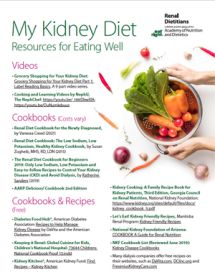
Click the image above to view/download the PDF.
CKD
Chronic Kidney Disease Diet
A renal diet helps support kidney function by managing sodium, potassium, phosphorus, and protein.
What to focus on:
- Follow stage-specific kidney guidance.
- Balance meals appropriately.
- Limit processed foods.
- Stay consistent with meals.
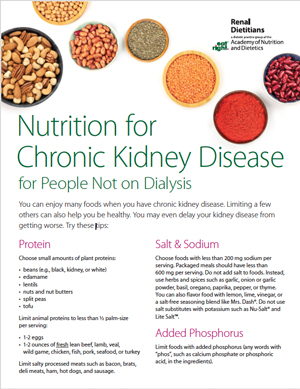
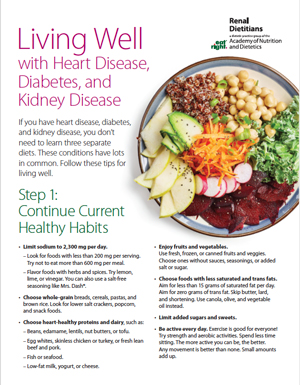
Download these PDFs for more information
Key nutrients to manage
NUTRIENT
WHY IT MATTERS
Sodium
Blood pressure and fluid balance
Potassium
Heart and muscle function
Phosphorus
Bone and heart health
Protein
Varies by kidney function
BALANCED PLATE EXAMPLE
PORTION
EXAMPLE
1/2 plate
Non-starchy vegetables
1/4 plate
Lean protein
1/4 plate
Healthy carbohydrates
Diabetic
Diabetic Diet
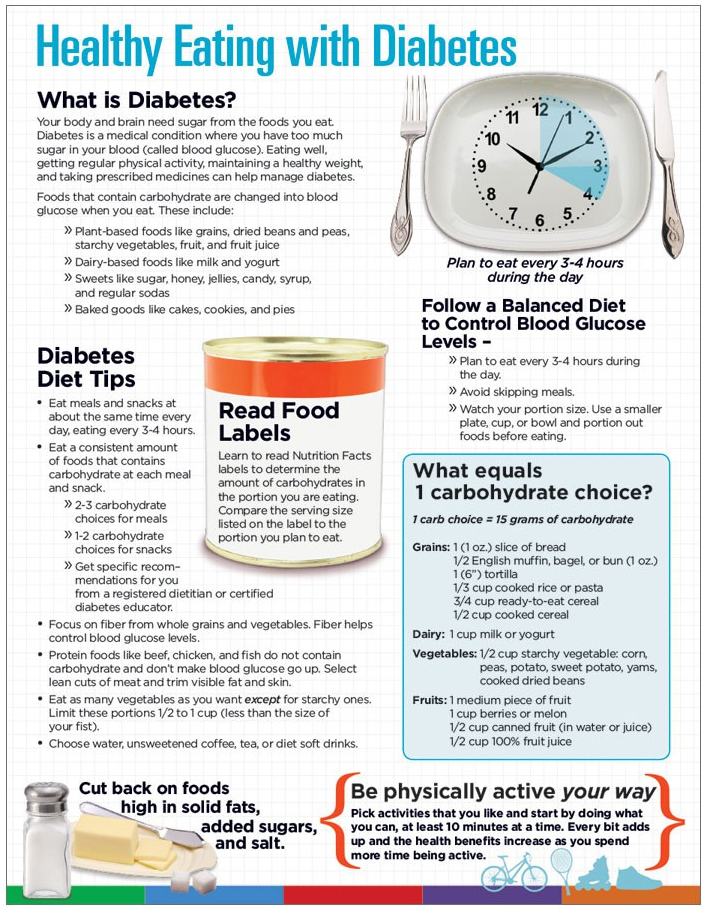
Download this PDF for more information
Dialysis
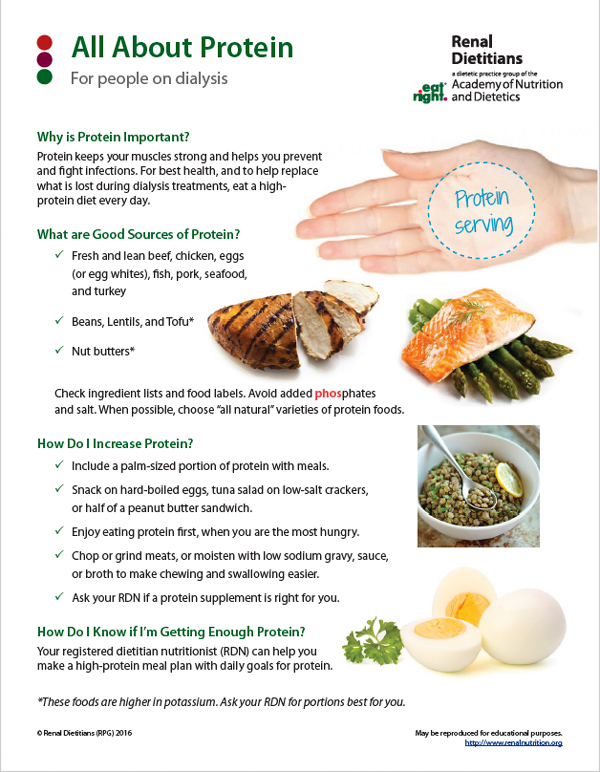
Dialysis Diet
Download these PDFs for more information
Food Labels
Food Labels
Download this PDF for more information
Potassium
Potassium Diet
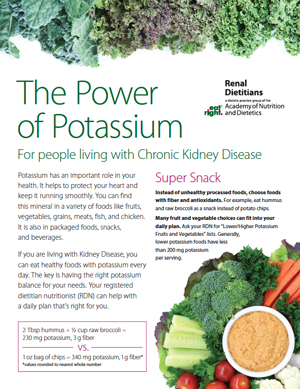
A potassium-controlled diet may be recommended based on your lab results. Potassium is important for heart and muscle function but must stay balanced.
What to focus on:
- Follow provider guidance for potassium levels.
- Be mindful of portion sizes.
- Spread potassium intake throughout the day.
Download these PDFs for more information:
Potassium food choices
Higher Potassium limit
Bananas, oranges
Potatoes, tomatoes
Avocados
Spinach
Dried fruits
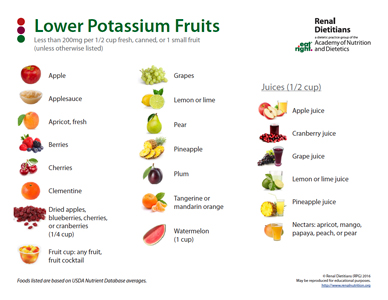
Lower Potassium Options
Apples, berries, grapes
Green beans, cucumbers
Pineapple, peaches
White rice, pasta
Fresh fruit (controlled portions)
Helpful tips
- Portion size matters.
- Follow lab-based guidance.
Phosphorus
Phosphorus Diet
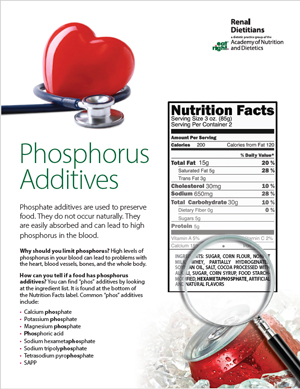
A phosphorus-controlled diet may be recommended for patients with kidney disease. When kidney function declines, phosphorus can build up in the blood, which may lead to bone weakness and heart complications.
What to focus on:
- Limit foods with added phosphorus, especially processed foods.
- Choose fresh, whole foods when possible.
- Check labels for phosphorus additives.
- Follow provider or dietitian guidance.
Download this PDF for more information
Phosphorus food choices
Limit or Reduce
Processed foods and fast food
Dark colas and sodas
Dairy products
Organ and processed meats
Foods with "PHOS" additives
Choose More Often
Fresh fruits and vegetables
Water and unsweetened drinks
Dairy alternatives
(if appropriate)
Fresh meats in moderation
Foods without additives
Helpful tips
- Look for 'PHOS' on ingredient labels.
- Limit processed foods to reduce phosphorus intake.
Sodium (Low Salt Diet)
Sodium (Low Salt Diet)
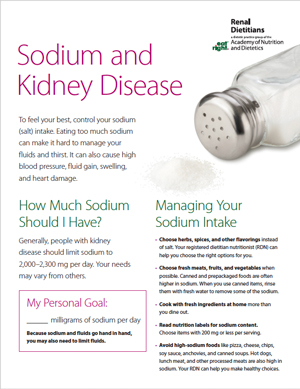
A low sodium diet helps manage blood pressure and fluid retention while protecting kidney health.
What to focus on
- Limit sodium to about 2,000 mg/day or as directed.
- Choose fresh foods instead of processed.
- Use herbs and spices instead of salt.
- Read labels carefully.
Download this PDF for more information
Sodium food choices
High sodium (limit)
Processed foods
Canned soups
Deli meats
Fast food
Salty snacks
Lower sodium options
Fresh or frozen vegetables
Low-sodium products
Fresh meats
Home-cooked meals
Unsalted snacks
Helpful tips
- Choose foods with <140 mg sodium per serving.
- Rinse canned foods to reduce sodium.
Protein
Protein Diet
Protein needs vary based on age, body size, and medical conditions. Protein recommendations for CKD are dependent on kidney function and are generally lower compared to protein recommendations for dialysis.
What to focus on:
- Include a protein source with each meal and snack.
- Choose lean protein options most often.
- Spread protein intake throughout the day instead of eating most of it at one meal.
- Ask your healthcare provider or dietitian what your personal protein goal should be.
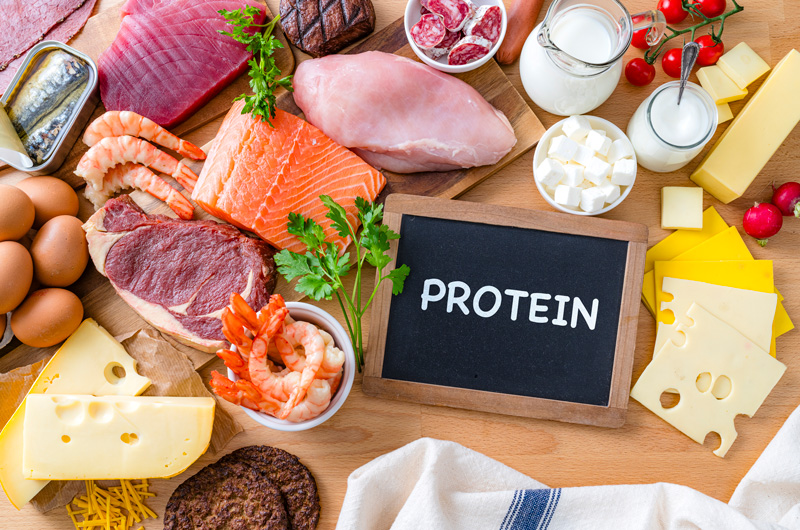
Protein-rich food choices for PD and Hemodialysis
Lean animal proteins
Chicken, turkey, fish, lean beef, pork tenderloin, tuna, salmon, shrimp
Dairy and eggs
Eggs, Greek yogurt, cottage cheese, low-fat cheese, milk or fortified milk alternatives
Plant-based proteins
Beans, lentils, chickpeas, tofu, tempeh, edamame, nuts, seeds, quinoa
Simple ways to add more protein
- Add eggs or egg whites at breakfast.
- Use Greek yogurt instead of regular yogurt.
- Add grilled chicken, tuna, turkey, or tofu to salads.
- Snack on cheese, nuts, yogurt, or a protein shake if recommended.
- Add beans, lentils, or lean meat to soups and casseroles.
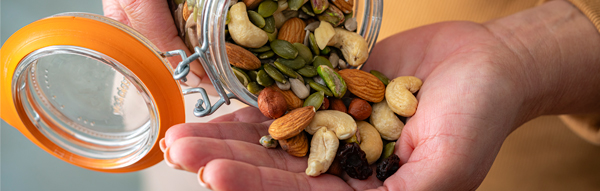
Sample Day
MEAL
EXAMPLE
Breakfast
Eggs with whole grain toast and berries
Lunch
Turkey or tuna sandwich on whole grain bread with a side salad
Snack
Apple slices with peanut butter or Greek yogurt
Dinner
Grilled chicken with non-starchy vegetables and brown rice or sweet potato
Kidney note: Some patients with kidney disease may need to limit protein. Patients should check with their nephrology team before starting a high protein diet.